
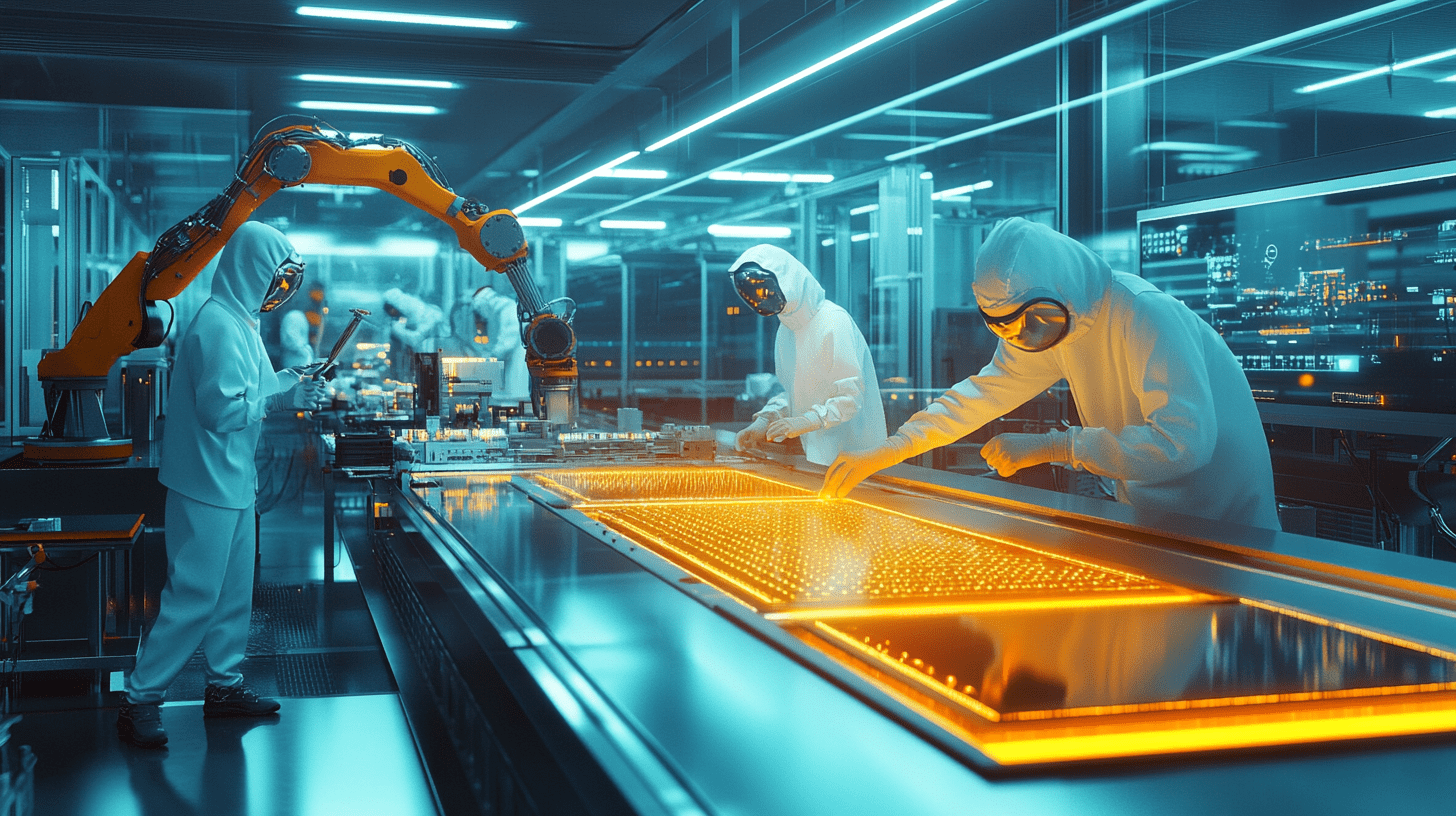
Semiconductors are the silent heroes of modern life. These tiny chips, packed with billions of microscopic transistors, power the devices and technologies that define the 21st century. Smartphones, cloud computing, artificial intelligence, autonomous vehicles, and even the global economy itself rely on the steady hum of silicon chips. But behind these marvels lies an intricate web of specialized companies, each playing a unique role in a vast and delicate ecosystem. To understand the semiconductor industry is to appreciate not only the chips themselves but the carefully orchestrated processes and players that bring them to life.
Índice de contenidos
The Framework of the Semiconductor Ecosystem
The semiconductor industry can be divided into three primary categories: chip designers, manufacturers, and enablers. Each plays a vital role in bringing chips from abstract ideas to tangible products.
Chip Designers: These companies conceptualize and create the architectures and functionalities of semiconductors. They focus on innovation, crafting blueprints that push the boundaries of performance, efficiency, and specialized applications.
Manufacturers: Often referred to as foundries, these companies fabricate the chips designed by others. Their role is to turn blueprints into physical products, a process requiring advanced tools, cutting-edge technologies, and exceptional precision.
Enablers: This group includes companies that create the tools and supporting components necessary for chip manufacturing and functionality. Without them, the other players would be unable to operate.
Each of these categories is crucial to the semiconductor supply chain, and their interplay forms the backbone of technological progress.
Chip Designers: The Architects of Innovation
Chip design is the starting point for any semiconductor. These companies imagine the functions a chip will perform and craft architectures to make it possible. Their work determines how efficiently a chip will run, how much power it will consume, and what applications it can support.
ARM Holdings: The Mobile Maestro
ARM designs the fundamental architecture for most of the world’s chips, particularly in mobile and embedded systems. It doesn’t manufacture chips; instead, it licenses its intellectual property to companies like Apple, Qualcomm, and Samsung, who use ARM’s designs as the basis for their processors. ARM’s Reduced Instruction Set Computing (RISC) architecture prioritizes energy efficiency, making it ideal for battery-powered devices and increasingly attractive in high-performance computing.
Why It Matters: ARM’s designs power billions of devices worldwide, from smartphones to IoT gadgets. Its energy-efficient architecture is a cornerstone of modern electronics.
NVIDIA: The Power of Parallel Processing
Originally known for its dominance in gaming, NVIDIA has transformed into a leader in artificial intelligence (AI) and high-performance computing. Its GPUs (Graphics Processing Units) are optimized for parallel processing, making them invaluable for tasks like AI training, scientific simulations, and video rendering. NVIDIA’s proprietary CUDA platform has become the gold standard for AI developers.
Why It Matters: NVIDIA’s hardware and software enable breakthroughs in AI and data center technologies, driving innovation across industries.
AMD: Versatility in Processors and Graphics
AMD has re-emerged as a strong competitor in the CPU and GPU markets. Its Ryzen processors challenge Intel in personal computing, while its Radeon GPUs rival NVIDIA in gaming and professional applications. AMD’s EPYC server processors are known for delivering high performance-per-dollar, making them popular in data centers.
Why It Matters: AMD’s innovations push the boundaries of computing power, fostering competition and reducing costs across the semiconductor landscape.
Qualcomm: Connecting a Wireless World
Qualcomm specializes in mobile processors and connectivity chips. Its Snapdragon processors integrate CPUs, GPUs, and modems into a single system-on-chip (SoC), making them essential for smartphones and IoT devices. Qualcomm’s leadership in 5G technology enables faster, more reliable mobile networks.
Why It Matters: Qualcomm’s chips power billions of connected devices, driving advancements in mobile and IoT technology.
Apple: Tailored Perfection
Apple’s custom-designed chips, like the M-series processors (M1, M2), showcase its ability to tailor silicon to its ecosystem. These chips combine high performance with remarkable energy efficiency, redefining what’s possible in laptops, desktops, and tablets.
Why It Matters: Apple’s chips set new benchmarks for performance and integration, influencing design trends across the industry.
Manufacturers: The Builders of Innovation
Manufacturing semiconductors is one of the most technologically demanding tasks in the world. It involves using advanced lithography techniques to etch billions of transistors onto tiny silicon wafers. Manufacturers, also known as foundries, are responsible for this meticulous process.
TSMC: The Global Giant
The Taiwan Semiconductor Manufacturing Company (TSMC) is the world’s largest contract chipmaker, producing chips for companies like Apple, NVIDIA, and AMD. It leads in advanced manufacturing processes, such as the 3nm node, which allows for smaller, faster, and more power-efficient chips.
Why It Matters: TSMC’s dominance makes it a linchpin in the global semiconductor supply chain. Its ability to produce cutting-edge chips drives progress across technology sectors.
Samsung Electronics: A Dual Role
Samsung is both a leading foundry and the largest producer of memory chips (DRAM and NAND). Its expertise in Extreme Ultraviolet (EUV) lithography enables it to compete with TSMC in advanced logic chip production.
Why It Matters: Samsung’s dual role provides strategic flexibility and supports advancements in both memory and processing technologies.
Intel: The American Pioneer
Once the undisputed leader in semiconductor manufacturing, Intel has struggled to keep pace with TSMC and Samsung in advanced processes. However, it remains a powerhouse in designing and manufacturing CPUs, and its investments in new fabs aim to reestablish its leadership.
Why It Matters: Intel’s resurgence is vital for diversifying global chip production and maintaining technological sovereignty in the U.S.
GlobalFoundries: Specialized and Reliable
GlobalFoundries focuses on mid-range and legacy nodes, which are crucial for industries like automotive and IoT. While it doesn’t compete in cutting-edge processes, its reliability and cost-effectiveness make it a key player.
Why It Matters: GlobalFoundries ensures the supply of chips for applications that don’t require the latest technology but need robust and scalable solutions.
Enablers: The Unsung Heroes
Enablers provide the tools, equipment, and supporting components necessary for chip design and manufacturing. These companies, though less visible, are just as critical as designers and manufacturers.
ASML: The Crown Jewel of Lithography
ASML is the only company capable of producing Extreme Ultraviolet (EUV) lithography machines, which are essential for creating the smallest and most advanced chips. Each machine costs over $150 million and is used by TSMC, Samsung, and Intel.
Why It Matters: Without ASML’s machines, advanced chip manufacturing would be impossible, making it a chokepoint in the global supply chain.
Texas Instruments: Analog Excellence
Texas Instruments specializes in analog chips and embedded processors, which handle power management and sensing functions in devices ranging from cars to medical equipment.
Why It Matters: TI’s chips are foundational for industries that rely on precision and reliability, including automotive and industrial applications.
Memory Makers: Storing the World’s Data
Memory chips provide the storage and temporary memory needed for modern computing. They are essential for every device, from smartphones to data centers.
Samsung, SK Hynix, and Micron
These companies dominate the memory market, producing DRAM for fast, temporary storage and NAND flash for long-term data storage. Their chips power everything from smartphones to high-capacity servers.
Why It Matters: Memory chips enable data storage and processing for the ever-growing demands of cloud computing, AI, and mobile technology.
Why It All Matters
The semiconductor industry is not just about making chips; it’s about enabling the entire digital economy. Chip designers innovate, manufacturers build, and enablers provide the tools that keep the ecosystem functioning. Without this delicate interplay, the devices and technologies we take for granted would cease to exist.
As geopolitical tensions rise and demand for semiconductors skyrockets, the importance of this industry will only grow. Each company, from ARM and NVIDIA to TSMC and ASML, plays a vital role in ensuring the world remains connected, efficient, and innovative. This symphony of silicon is the foundation upon which our future is built.