
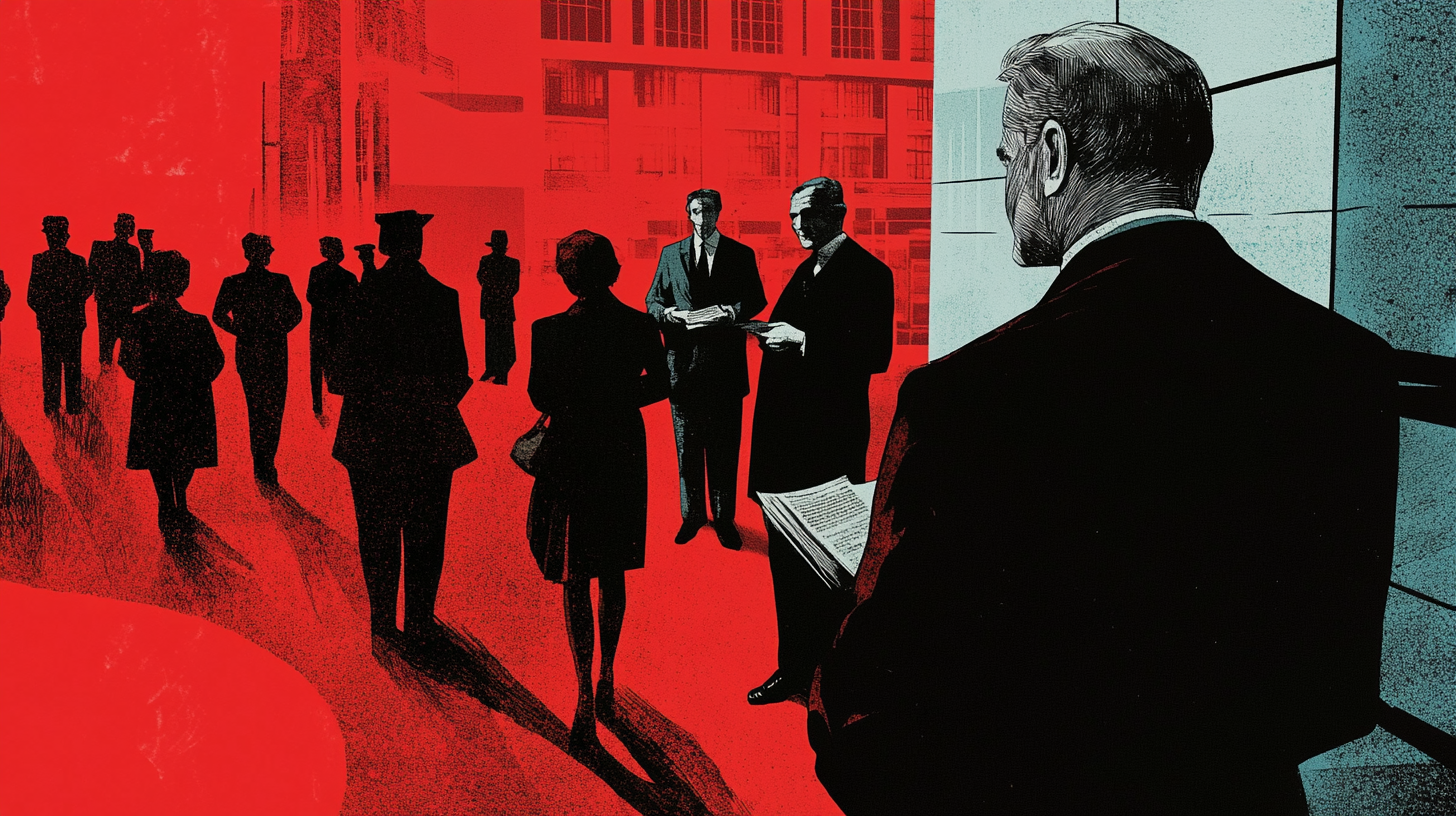
In March 2025, the world continued its uneasy march through an era defined less by a single defining crisis than by a cascade of overlapping upheavals. War, inflation, climate disasters, democratic decline, and technological disruption are no longer anomalies—they are the water in which nations now swim. The post-Cold War consensus is long dead; what replaces it remains uncertain. But one thing is clear: power is centralising, rules are fraying, and global cooperation is in retreat.
Índice de contenidos
I. Geopolitics on the Edge
Israel: A War Without Borders
Israel’s war in Gaza has metastasised into a broader regional confrontation. The IDF has launched strikes into southern Lebanon, killing what it claims was a senior Hizbullah commander. Houthi rebels in Yemen have responded by firing missiles toward Tel Aviv—intercepted, for now. Meanwhile, the Hamas-controlled health ministry claims the death toll in Gaza has exceeded 50,000.
Binyamin Netanyahu’s government scraped through a crucial budget vote, preserving its coalition. The spending plan allocates massive sums to defence, but also contains subsidies and funding aimed at satisfying far-right factions. Securing the budget avoids immediate elections but locks Israel into a high-cost path of military expansion and ideological entrenchment. Abroad, support among Western allies is eroding; at home, the war has strained social cohesion and triggered an identity crisis in the Jewish diaspora.
Turkey: From Democracy to Dynasty
Across the Mediterranean, Recep Tayyip Erdoğan is using war-like tactics against his own people. The arrest of Ekrem İmamoğlu, Istanbul’s popular opposition mayor, on dubious corruption charges, sparked massive protests and the detention of over 1,800 demonstrators. The markets reacted swiftly—the lira tanked and the stock market nosedived. After emergency measures, some stability returned, but the damage is deeper than fiscal: Turkey’s democracy, once a model for the region, is now on life support.
Ukraine: Frozen Lines and Flickering Hopes
As Ukraine braces for a third summer of war, there are tentative diplomatic shifts. American envoys held separate discussions with Moscow and Kyiv, exploring a maritime ceasefire in the Black Sea. Ukraine appears amenable; Russia has attached conditions—chiefly, the lifting of EU sanctions on key banks. This proposal is unlikely to lead to peace, but it hints at a quiet acknowledgment on both sides that full victory may be unattainable.
Meanwhile, Russian tactics seem to be shifting from military escalation to geopolitical attrition. By tying up Western attention and drawing out negotiations, Moscow hopes to outlast NATO’s patience.
II. The Trump Doctrine 2.0
MAGA in the White House (and the Classroom)
Donald Trump’s return to power is already reshaping America—and the world. His second term has been characterised by theatrical disruptions, institutional stress tests, and a government-wide shake-up orchestrated, in part, by Elon Musk. Musk, who appears to be playing the dual role of tech czar and bureaucratic wrecking ball, is leading an “efficiency drive” aimed at transforming federal operations. Critics say it amounts to a purge of expertise in favour of ideology and loyalty.
Education, too, is in the crosshairs. The MAGA movement is remoulding curricula, banning books, and installing partisan school boards. Public institutions are being repurposed into vehicles for cultural combat, with freedom of expression increasingly a casualty.
Trade Policy as Performance Art
The administration’s trade agenda is both radical and chaotic. A blanket 25% tariff on all vehicle and auto part imports has jolted the global supply chain. On April 2nd, Trump is expected to announce broad “reciprocal tariffs,” targeting countries he accuses of taking advantage of America. In typical Trumpian fashion, the day has been branded “Liberation Day.”
Companies are scrambling to adjust. Hyundai pledged $21 billion in new U.S. investments, including a massive steel plant in Louisiana. Trump celebrated this as vindication for his protectionism, declaring “money is pouring in.” But such deals are also strategic: firms are paying up to buy exemptions from future tariff pain.
Copper markets have already been rocked by anticipation of new duties. Prices surged in New York, as traders redirected supplies to U.S. warehouses to beat potential tariffs. Trade unpredictability has replaced globalisation as the new normal.
III. Economies in Transition
Britain: Fiscally Conservative, Socially Cruel
Rachel Reeves, Britain’s Chancellor of the Exchequer, delivered a Spring Statement marked by tough choices and thin margins. Growth forecasts were slashed to 1%, inflation expectations revised upward, and cuts to disability and incapacity benefits announced. Reeves avoided raising taxes, opting instead for welfare tightening and modest defence spending increases. Her hope is to keep Labour’s credibility intact. But the public reaction was lukewarm, and critics accused her of papering over structural economic decay.
A fire at a local electricity substation caused Heathrow—Britain’s global gateway—to shut down for 18 hours, causing flight chaos and raising awkward questions about national resilience. It was not just an infrastructure failure—it was a metaphor for Britain’s sputtering state capacity.
Germany and Europe: Winners, Losers, and Chipmakers
In a sign of shifting European business priorities, SAP has overtaken Novo Nordisk as Europe’s most valuable company. The software giant is riding the artificial intelligence boom, while Novo’s weight-loss drug frenzy (Ozempic, Wegovy) cools. Meanwhile, ASML, the Dutch chipmaker, is warning that European complacency on tech self-sufficiency could prove fatal in an era of semiconductor wars.
Boeing, under legal scrutiny at home for its role in two fatal crashes, received a geopolitical lifeline from Trump, who tapped it to develop the F-47 fighter jet—named, unsubtly, in honour of his presidency.
IV. Tech Titans, Tabloids, and Tensions
Musk’s Multipolar Madness
Elon Musk’s reach now extends from satellites and semiconductors to civil service reform and planetary colonisation. His companies are in various states of disrepair and reinvention. Tesla’s sales plunged 40% in Europe and 76% in Germany, where his flirtations with the far right have soured the brand. The FBI is investigating attacks on Tesla facilities, reportedly by domestic extremists.
Meanwhile, SpaceX continues its aggressive push toward Mars, with Musk reportedly lobbying for a public-private mission by 2030. Neuralink and X are embroiled in lawsuits and scandals, but Musk remains undeterred. His empire has become less a business portfolio than a political force unto itself.
V. Humanitarian Retreat, Pandemic Legacy, and Global Health
Foreign aid is quietly vanishing from the Western political agenda. Congressional authorization for PEPFAR—America’s landmark AIDS relief programme—has expired. Coupled with a broader freeze in aid announced in January, experts warn that nearly 3 million additional deaths from AIDS could occur by 2030.
Yet even as aid recedes, scientific advances march on. A new malaria vaccine is being rolled out in parts of Africa. If scaled rapidly, it could save hundreds of thousands of lives annually. But that requires donor commitment at a moment when generosity is in retreat.
COVID’s long tail continues to shape public health. Five years after the initial outbreak, scientists are re-evaluating how they responded. Progress has been made in pandemic preparedness, but institutional learning remains uneven—and political willingness remains weak.
VI. Cultural Politics and Social Fault Lines
Global Rightward Drift
Trump’s rise is affecting conservative politics beyond America. Far-right leaders in Europe—particularly Giorgia Meloni in Italy and Marine Le Pen in France—are struggling to reconcile his nationalist zeal with their own political viability. Some now view him as more liability than lodestar.
In Japan, courts effectively banned the Unification Church, following a public outcry over its links to the assassination of former PM Shinzo Abe. It is a rare moment of judicial assertiveness in a society often resistant to direct confrontation with political-religious entanglements.
In India, communal tensions over historical memory have led to violence, as the Modi government continues to harness history for electoral gain.
VII. Climate and Calamity
Wildfires in South Korea, unprecedented in scale, killed at least 27 people, igniting fears that the region is unprepared for climate-linked disasters. Meanwhile, submarine detection is being compromised by warming oceans, adding a new wrinkle to naval warfare and defence strategy.
Central Asia’s economies are booming thanks to gold prices, as investors flee fiat volatility. But beneath the glitter lies an old risk: overdependence on commodity cycles.
VIII. The Americas: Fragmentation and Reckonings
Mexico: A Nation Haunted by the Disappeared
A newly discovered clandestine killing site has shocked Mexico yet again. Despite years of promises by President Andrés Manuel López Obrador to prioritize “hugs, not bullets,” the tide of cartel violence continues unabated. The unearthing of this site—likely used for mass detentions and executions—underscores the Mexican state’s inability to provide basic security or justice. For families of the disappeared, it is a chilling reminder that impunity remains the norm.
Hispaniola: One Island, Two Realities
Thousands of Haitians are massing at the border with the Dominican Republic, fleeing a country that has all but collapsed. Armed gangs control swathes of Haiti, while its government is largely absent. The Dominican response has oscillated between humanitarian relief and hardline enforcement. The contrast is stark: Haiti is a failed state in freefall; the Dominican Republic, a functioning—if imperfect—state, struggling to shield itself from regional contagion. International engagement remains minimal, compounding the crisis.
IX. Europe: Resistance, Resettlement, and Retreat
Ukrainian Refugees: Settling into Permanence
Europe is gradually coming to terms with a difficult truth: millions of Ukrainians displaced by war may not return home anytime soon. Originally seen as temporary guests, they are increasingly becoming long-term residents. Countries such as Poland, Germany, and the Netherlands are adapting integration policies, adjusting education systems, and rethinking housing provisions. This quiet demographic shift is reshaping local politics—and potentially European identity.
Britain’s Culture Wars Reach Academia
The University of Sussex has been fined £585,000 by the Office for Students, the higher education regulator, for failing to uphold freedom of speech. The case centres around Kathleen Stock, a professor who voiced gender-critical views and faced intense backlash. The regulator concluded that the university’s policies created a “chilling effect.” The fine marks a watershed: for the first time, a British university is being penalised for suppressing legal but controversial speech. In Britain’s culture war, free speech just found an unlikely champion in bureaucracy.
X. Technology, Surveillance and the Digital Battleground
China’s Cyber Offensive: Stealthier, Smarter, Stronger
Chinese hackers are now deploying more refined and elusive techniques, aimed less at short-term theft than long-term disruption. Cybersecurity analysts report that China is increasingly targeting critical Western infrastructure—not to paralyse it immediately, but to prepare for potential future leverage. The strategy is part of a broader effort to project power not just through military means, but through digital dominance. A new kind of cold war is well underway—and it is being waged through code.
China’s Real Estate Sector: From Boom to Bargain Bin
China’s housing market, once a pillar of global growth, continues to unravel. Property developers, desperate to clear inventory, are offering cars, gold bars, and even livestock to incentivise buyers. Yet even these gimmicks can’t mask the reality: confidence has collapsed, prices have fallen, and millions of unfinished flats stand empty. What was once a national wealth generator is becoming a deflationary drag—and a political liability for the Communist Party.
XI. Culture, Soft Power, and Social Tensions
Hollywood’s Fairytales Get a Rewrite
The newly released Snow White remake has become a cultural flashpoint. The film features a non-white lead, eschews traditional romantic tropes, and embraces a more explicitly feminist narrative. To some, it is a modern refresh of a tired archetype. To others, it is the latest casualty of Hollywood’s “woke capitalism.” The backlash is part of a broader reckoning in the entertainment industry, as studios struggle to balance ideological messaging, creative risk, and financial viability.
Streaming’s Billion-Dollar Queen
Shonda Rhimes, the creative force behind Grey’s Anatomy and Bridgerton, has emerged as one of streaming television’s most valuable assets. Her ability to craft high-drama, globally resonant stories has made her a linchpin for Netflix and other platforms trying to justify their expensive original content strategies. As Hollywood contends with changing business models, Rhimes’ ascent is a rare example of creative talent turning cultural capital into financial leverage.
XII. Religion, Soft Power and Shifting Institutions
Japan Dissolves the Unification Church
In a landmark ruling, a Japanese court has effectively banned the Unification Church, long viewed with suspicion for its cult-like practices and political influence. The decision follows years of public outcry, particularly after the assassination of former Prime Minister Shinzo Abe in 2022 by a man who blamed the Church for his family’s financial ruin. Investigations revealed deep, often hidden ties between the sect and members of Japan’s ruling Liberal Democratic Party. The ban marks a rare and decisive stand against religious-political entanglement in a society typically allergic to institutional disruption.
XIII. Science and Health: Fragile Progress
Malaria Vaccine Rollout: A Race Against Apathy
Amid the retreat of foreign aid, a quiet scientific triumph continues: the world’s first malaria vaccine is being deployed in parts of Africa. Yet its rollout is patchy, its funding uncertain, and its potential undermined by donor fatigue. Public health experts warn that without urgent recommitment from Western nations, the vaccine could become another underutilised miracle—much like the COVID-19 vaccine in the developing world.
Climate and Warfare: Submarines in Trouble
Rising ocean temperatures are doing more than bleaching coral reefs—they are also interfering with the detection of submarines. Sonar technology, long reliant on predictable underwater acoustic patterns, is becoming less effective. This is reshaping naval doctrine and defence strategy, particularly for NATO countries whose underwater capabilities are critical to deterrence. Climate change, once considered a long-term issue, is now a frontline concern in military planning.
United States: Legal, Military, and Political Fallout
- Boeing Trial: A federal judge has scheduled Boeing’s trial for June 23rd over criminal charges related to its misleading of regulators before two fatal 737 MAX crashes. The previous plea deal was rejected, partly because of how the compliance monitor was selected—based on diversity criteria rather than merit, the judge said.
- Boeing’s Redemption? Trump selected Boeing to build the F-47, the U.S. Air Force’s next-generation fighter jet, replacing the F-22. The naming is a not-so-subtle nod to Trump’s own title as the 47th U.S. president.
- Signal Chat Leak: A major security blunder saw journalist Jeffrey Goldberg mistakenly added to a White House Signal chat that disclosed classified plans to bomb Houthi rebels. The leak also exposed disparaging remarks about NATO by Vice President J.D. Vance and Defense Secretary Pete Hegseth. No officials were punished.
- Aid Freeze and PEPFAR: The U.S. Congress failed to renew PEPFAR, the global AIDS relief program, coinciding with a broader foreign aid freeze. This jeopardizes treatment access for millions and could result in nearly 3 million preventable deaths by 2030, according to The Lancet HIV.
- Migration Crackdown: The Trump administration is ending temporary legal protections for 530,000 migrants from Cuba, Haiti, Nicaragua, and Venezuela. Those remaining may face deportation. Separately, Venezuela is petitioning El Salvador’s Supreme Court to release Venezuelans held there under a U.S. deportation deal—America claims they’re gang members; Venezuela denies it.
Business & Economics: Company Woes and Strategic Shifts
- Nike in Decline: Nike’s stock plummeted to a five-year low after it forecast a continued revenue slump. Problems include weak Chinese demand, global tariffs, and geopolitical uncertainty, all eating away at its global footprint.
- ASML’s Cautionary Note: The Dutch chipmaker warned that Europe is falling behind in semiconductor self-sufficiency. The message is clear: without strategic coordination, the continent risks long-term tech irrelevance.
- Live Music Resilience: The live music industry is booming, seemingly immune to broader economic turbulence. But much of the growth is being siphoned off by ticket scalpers, prompting renewed calls for regulation.
- Nubank’s Expansion: Brazil’s digital bank, Nubank, continues its rapid growth. After conquering the Brazilian market with app-based banking, it’s now eyeing overseas expansion—particularly in Mexico and Colombia.
- Gold Surge: Central Asian economies are benefiting from a sharp rise in gold prices. Investors, wary of fiat currencies and global instability, are driving demand. For resource-rich states like Kazakhstan, this has provided a windfall.
Artificial Intelligence and Law
- Big Law’s Trump Gamble (Schumpeter column): Major American law firms are increasingly accommodating Trump-era legal norms to win government business. This shift risks undermining legal independence—and corporate reputations—in pursuit of short-term access.
Europe’s Strategic Silence on China
- Diplomatic Self-Censorship (The Telegram column): European governments are increasingly muted in their criticism of China’s human rights abuses, prioritizing economic ties over values. The piece warns that this silence may erode Europe’s moral standing and make future pushback harder.
Cultural Commentary & Media
- “Zuckraking”: A new kiss-and-tell book about Mark Zuckerberg and Meta has been widely panned. Critics say it reveals more about the author’s bitterness than about Meta’s corporate culture, and it’s seen as a case study in how not to do corporate exposés.
- “Adolescence”: A Global Smash: A new global streaming hit, Adolescence, taps into the universal angst of growing up in an unstable world. Its success demonstrates the rising cultural clout of international storytelling and the power of shared generational anxiety.
- “The Debt Sealing”: A historical essay explores past transatlantic budget fights during wartime, drawing parallels to the current U.S.-EU disagreements over military spending and aid.
Conclusion: The Destruction-Construction Cycle
From Washington to Warsaw, Gaza to Guangdong, the world seems to be undergoing a dual process of destruction and attempted reinvention. Old structures—liberal democracy, free trade, institutional multilateralism—are being razed. But what will rise in their place is unclear. This is not a return to the 20th century, but the birth pangs of something new. Perhaps a multipolar disorder. Perhaps a new ideological age.
What is certain is that this era will be defined not by who has the best ideas, but by who can build (or rebuild) faster than others can tear things down. As Elon Musk might say—if only half in jest—the future is already late.